


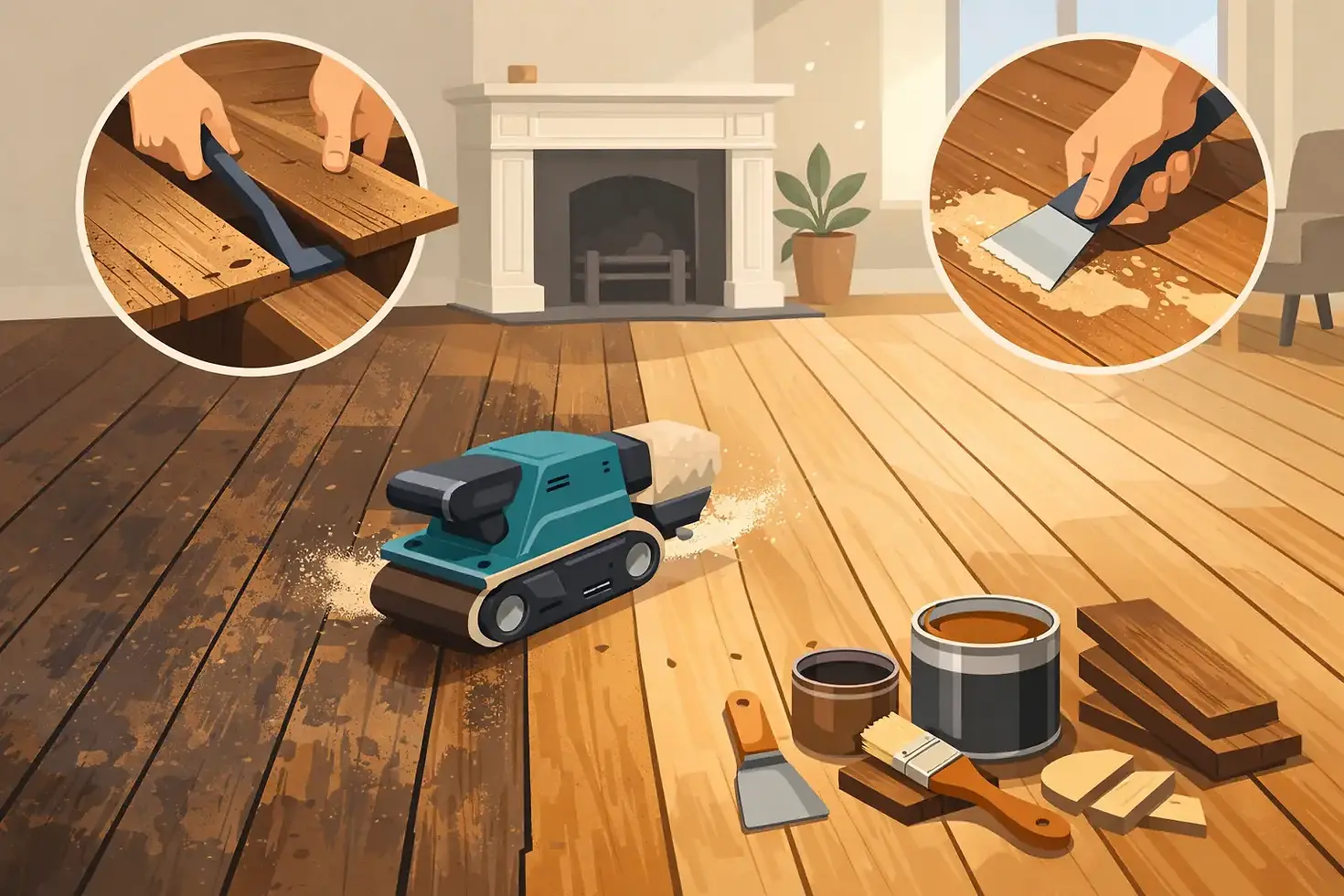
A Guide to Restoring Period Floorboards

Original floorboards can change a room more than almost any other feature. In Victorian terraces, Edwardian conversions and period flats across London, they often sit hidden under old carpet, dark varnish, paint splashes or years of wear. A proper guide to restoring period floorboards starts with one simple point: the best results come from understanding what you have before you try to improve it.
Period timber has character, but it also comes with movement, gaps, repairs, stains and the occasional surprise once coverings come up. Some boards will respond beautifully to sanding and finishing. Others need careful replacement, stabilising or insulation work first. The aim is not to make an old floor look brand new. It is to bring back its natural beauty, improve durability and keep the character that made it worth saving.
What makes period floorboards different
Older floorboards behave differently from modern flooring because they were installed in different conditions and often with softer timbers. In many London homes, original boards are pine, and after decades of central heating, foot traffic and seasonal movement, they can become dry, uneven and noisy. You may also find historic repairs, old nails, cut sections from plumbing works, or boards that have bowed slightly over time.
That is why a guide to restoring period floorboards cannot be reduced to sanding alone. The visible finish matters, but so do the subfloor, the condition of the boards and the way the room is used. A front reception room in a family house needs a different finish from a spare bedroom in a top-floor flat. If noise reduction matters, insulation between joists may be just as important as the final coat.
Start with the condition, not the finish
Before any machinery comes out, the floor needs a proper assessment. This is where many restoration projects are won or lost. If boards are loose, heavily split or affected by damp, sanding first will only highlight the problem.
Look closely at the thickness of the timber, the extent of black staining around old fixings, any evidence of rot, and whether previous sanding has already taken the boards down too far. Gaps are common in period properties and not always a fault. Fine seasonal gaps can be left alone, while larger spaces that trap draughts and dirt often benefit from gap filling or sliver repairs.
Painted boards need particular care. In some homes, multiple old coatings sit on the surface, and the floor may need more preparation than expected. Bitumen residue from old coverings can also affect what finish is suitable afterwards. This is one reason professional advice early on can save both time and money.
Repairs come before sanding
The most effective restorations deal with structure first. Loose boards should be secured properly, damaged sections replaced with closely matched reclaimed or compatible timber, and protruding nails removed or punched down. If there are squeaks, movement between joists may need attention before the cosmetic work begins.
This stage is also the right time to think about insulation. In many period homes, especially ground-floor rooms, lifting selected boards to install insulation can make the room warmer and quieter without changing the character of the floor. It is easier to do that before sanding and finishing than after.
Good repairs should blend in, not shout for attention. New timber can be toned and finished to sit comfortably alongside the original boards, but exact matching depends on age, grain and how the existing floor has mellowed over time. That is where experience really shows.
Sanding period floorboards properly
Sanding is the stage most homeowners picture first, and with good reason. It removes old coatings, evens out wear and reveals the timber beneath. But period boards need a measured approach. Aggressive sanding can flatten the texture too much, expose fixings, or shorten the life of already-thin boards.
Professional sanding normally works through several grit levels to clean the surface without taking away more wood than necessary. Edges, corners and areas around fireplaces or thresholds often need separate detail work. Dust control also matters more than many people realise. In occupied homes, especially London terraces and flats where disruption needs to be managed carefully, modern dust-extraction systems make a major difference to cleanliness and comfort during the project.
Not every mark should disappear entirely. Some age marks are part of the floor's history. The right balance is a clean, sound and attractive surface, not a stripped-back result that looks oddly new for the property.
Choosing the right finish for a period property
The finish affects not only the look of the floor but also how it performs day to day. This is where taste, lifestyle and maintenance all come into play.
Hardwax oils are a popular choice for period floorboards because they give a natural, low-sheen appearance that suits older homes well. They tend to enhance grain and warmth without creating a heavy surface film. They are also easier to repair locally if a section gets scratched. The trade-off is that they need proper maintenance and may not suit every high-traffic setting unless the right product is chosen.
Lacquers provide a more sealed surface and can offer excellent wear resistance, which appeals to busy households, rental properties and pre-sale refurbishments. Modern water-based systems are far better than older finishes in both appearance and drying profile, but they can look slightly more uniform than an oil. Whether that is a drawback depends on the style you want.
Staining is another option, though it needs care on older pine boards. Darker colours can look striking, but they may emphasise patch repairs, filler lines or uneven absorption in historic timber. Natural and mid-tone finishes often sit more comfortably in period interiors, especially where original skirtings, doors and fireplaces remain.
Timing, disruption and what to expect
One of the biggest concerns for homeowners is how disruptive restoration will be. The honest answer is that it depends on the condition of the floor, the size of the area and whether repairs are needed before sanding begins.
A straightforward room in decent condition may move quickly. A larger project with broken boards, extensive gap work, staircase restoration or insulation below the floor will take longer. Drying and curing times also vary depending on the finish used. While modern equipment and dust-controlled methods reduce mess significantly, rooms still need to be cleared properly and access planned in advance.
For landlords and renovators, timing often matters around tenant changeovers or decorating schedules. For families living in the property, phasing the work room by room may be the better route. A good contractor will explain the likely sequence clearly rather than giving a one-size-fits-all estimate.
Cost depends on more than square metre rate
People often ask for a price per square metre, and that can be a useful starting point, but period floorboards rarely fit a simple formula. The cost depends on the amount of preparation, the number of repairs, whether boards need lifting, the finish selected and how accessible the property is.
A well-preserved bedroom floor with light sanding and a clear finish is one thing. A ground-floor reception room in a London terrace with loose boards, deep gaps, historic staining and insulation work below is another. Cheaper quotes can look appealing until you realise they do not include repairs, proper finishing systems or the level of dust control needed in an occupied home.
The better question is not just what the project costs, but what is included and how long the result is expected to last.
When it makes sense to call a specialist
Some homeowners do lift carpets and reveal beautiful boards worth keeping. Others uncover timber that needs far more than a weekend hire sander. If your floor has movement, missing sections, uneven previous repairs, heavy coatings, parquet detailing nearby or signs of damp, specialist input is usually the safer route.
This is especially true in London properties where period features add real value and the margin for error is small. An experienced company such as Love Your Floor London can assess whether the boards are suitable for restoration, what repairs are needed, and which finish will suit both the property and the way you live. Just as importantly, the work can be carried out with professional sanding systems, quality finishing products and a process designed to keep disruption under control.
Restoring an old floor is rarely about chasing perfection. It is about giving original timber another long life, with the marks of age softened, the damage repaired and the room brought back into balance. Done properly, period floorboards do more than look good. They make the whole house feel more honest, more settled and far better to live in.
If you are standing on tired boards and wondering whether they are worth saving, they usually tell you the answer once the right person has looked closely.



Comments