


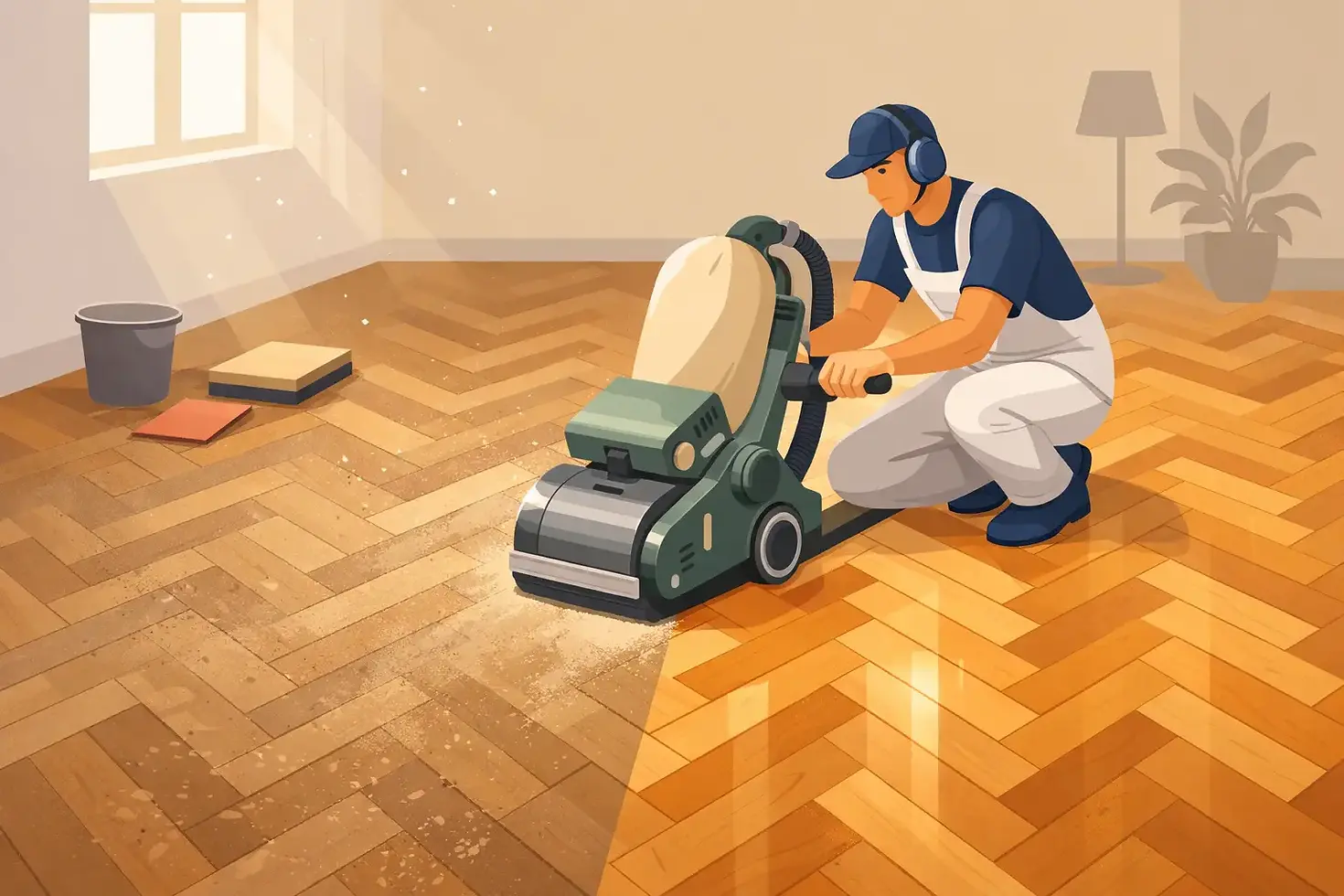
Parquet Floor Sanding Done Properly

A tired parquet floor usually gives itself away long before it is beyond repair. The surface looks dull in the areas people walk most, the finish starts to break down around doorways, and old scratches collect years of wear that no mop will hide. Done properly, parquet floor sanding brings that detail back. It removes the damaged top layer, smooths the surface, and prepares the floor for a finish that suits both the look of the room and the level of day-to-day use.
For London homeowners, that matters more than many expect. Parquet is one of the few flooring styles that can make a flat, terrace or family home feel sharper and more valuable at the same time. But because it is made from individual timber blocks laid in patterns such as herringbone or chevron, the sanding process needs more care than standard floorboards. The goal is not simply to make it look newer. The goal is to restore the pattern cleanly, protect the wood, and avoid unnecessary disruption while the work is carried out.
What makes parquet floor sanding different?
Parquet is less forgiving than many people realise. With straight floorboards, sanding follows the grain of long planks. With parquet, the grain direction changes from block to block, sometimes every few inches. That means the sanding sequence, the machinery used and the skill of the operator all make a real difference to the final result.
A good parquet floor sanding job should leave the pattern crisp and even, not rippled, scratched or overworked. If the floor has old bitumen adhesive, loose blocks, previous filler lines or uneven wear, those issues need to be handled before the final finish goes on. Rushing straight to sanding without repairs often leads to a floor that looks better for a few weeks but still shows movement, gaps or patchy colour once the light hits it.
This is also why older parquet in Victorian and Edwardian homes needs a slightly different approach from parquet in a newer property. Period floors often have more character, but they can also have more movement, more historic repairs and more variation in timber tone. Modern parquet may be flatter and more uniform, yet it still needs careful preparation to avoid visible sanding marks and uneven finishing.
When a parquet floor should be sanded
Not every parquet floor needs full restoration immediately. Some need a fresh coat of finish. Others need repairs first. But there are clear signs that parquet floor sanding is the right next step.
If the finish has worn through and bare wood is showing, sanding is usually needed. The same applies when there are deep surface scratches, stubborn staining, blackened patches from moisture, or an uneven sheen across the room. Floors that have been covered for years with carpet or laminate often benefit as well, especially when the timber beneath is sound but looks tired.
It depends, though, on the thickness and condition of the blocks. A solid wood parquet floor can usually be sanded several times over its lifespan. An engineered parquet floor has a wear layer, so the available depth is more limited. That is why inspection matters before any work starts. The right advice is not always to sand immediately. Sometimes a floor needs block replacement, stabilisation or a lighter restoration approach first.
The process from first inspection to final coat
A professional process starts with the condition of the floor, not the machine. Loose or damaged blocks are identified first, because sanding an unstable parquet floor only makes the problem more obvious. Where required, blocks can be re-bonded or replaced to keep the pattern consistent and secure.
Once repairs are complete, the floor is prepared for sanding. In occupied homes, dust control is a major concern, and rightly so. Modern dust-extraction systems connected to high-grade sanding equipment make the process far cleaner than many people expect. That matters in London properties where space is tight, furniture often has to be managed carefully, and clients want work completed with as little disruption as possible.
The sanding itself is done in stages, using progressively finer abrasives to remove old finishes, flatten the surface and refine the timber. On parquet, this stage needs judgement. Too aggressive, and you risk visible cross-grain scratching or excessive wear on edges. Too cautious, and old coatings or uneven patches remain trapped beneath the new finish.
After the main sanding passes, gap filling may be carried out where suitable. This improves the overall look of the floor and can reduce dirt traps between blocks, but it is not always appropriate to force-fill every small line in older timber. Natural movement still needs to be respected. A good result balances appearance with the way wood behaves in a real home.
The final stage is finishing. This is where the floor gets its protection, sheen level and much of its final character.
Choosing the right finish for parquet
The best finish depends on how the room is used and the look you want from the timber. For many homeowners, hardwax oil is a popular choice because it gives parquet a rich, natural appearance and works particularly well in period interiors. It tends to enhance grain and warmth, making herringbone and other decorative patterns feel more defined without looking overly glossy.
Lacquered finishes suit clients who want strong surface protection and a cleaner, more contemporary appearance. These can work especially well in busy family homes, hallways and open-plan spaces where regular foot traffic is expected. Modern professional-grade lacquers are available in different sheen levels, from ultra-matt through to silk and gloss, so the floor can be tailored to the style of the room.
Staining is another option, but parquet staining needs care. Because each block can absorb colour slightly differently depending on grain direction and age, the final tone should always be tested properly first. Dark stains can look striking, but they may also show dust and scratches more readily. Lighter natural tones often feel more timeless and easier to live with in London homes.
How long parquet floor sanding takes
Most domestic parquet floor sanding projects take a few days rather than a few hours. The exact timing depends on the size of the area, the condition of the floor, the number of repairs needed and the finish selected. Drying and curing times also matter. A room may be ready for light use before the finish has fully hardened, so aftercare advice should be followed carefully.
For clients planning broader renovation works, timing the sanding correctly is important. It is usually best carried out after messy building work is complete but before final decorating and furniture placement. That helps protect the finish and avoids unnecessary risk to newly restored timber.
Common concerns about dust, cost and disruption
The biggest concern for many customers is still dust. Older sanding methods earned their bad reputation, but modern dust-controlled systems have changed that dramatically. While no process is completely without some residue, the difference is substantial when specialist machinery and proper containment are used.
Cost depends on more than square metreage. A straightforward parquet floor in good condition will naturally cost less than one that needs block repairs, detailed edge work, stain application and multiple finishing coats. Layout also matters. Decorative borders, awkward room shapes and stair details can add labour. The fairest way to price the work is always by looking at the actual floor rather than giving a guess based on a rough room size.
Disruption is usually less than clients fear when the project is planned properly. Furniture can often be handled in stages, rooms can be worked on in sequence where practical, and clear preparation advice makes the process easier from day one.
Why specialist workmanship matters
Parquet is one of the most rewarding floors to restore, but it shows poor workmanship quickly. Uneven sanding, careless filling, cheap finishes or weak repairs can flatten the pattern and shorten the life of the restoration. On the other hand, a well-restored parquet floor can transform a property, whether it is an original hall in a period terrace or a more recent herringbone installation in a modern flat.
That is why specialist equipment, proper dust extraction and proven finishing systems matter. So does experience with different timber species, adhesive types and property styles across London. At Love Your Floor London, that combination is what allows parquet floors to be restored with a high standard of finish and a low-disruption approach that suits real homes.
If your parquet has lost its finish, its colour or its impact, the answer is not always replacement. Very often, the floor you already have simply needs the right restoration process to show its quality again.



Comments