top of page

Staircase Sanding and Restoration Explained

  • Writer: Robert Szutyanyi
    Robert Szutyanyi
  • May 18
  • 6 min read

A tired staircase gives itself away long before the rest of the room does. Worn treads, chipped edges, creaks underfoot and layers of old varnish can make an otherwise well-kept home feel neglected. Done properly, staircase sanding and restoration brings back the character of the timber, improves day-to-day durability and lifts the overall look of the hallway and landing without replacing the whole structure.

In many London homes, the staircase is one of the hardest-working timber features in the property. It takes constant foot traffic, knocks from shoes, pets, bags and furniture, and in period houses it has often been painted, carpeted, filled and patched over many decades. That is why restoring stairs is rarely just a cosmetic job. It usually involves careful sanding, repairs, finish selection and attention to safety, noise and long-term wear.

What staircase sanding and restoration actually involves

At first glance, sanding a staircase sounds similar to sanding a timber floor. In practice, it is far more detailed. A staircase has treads, risers, strings, bullnoses, spindles, newel posts and awkward edges, all of which need different tools and a more controlled approach.

The process normally begins with an inspection. This helps identify loose components, split treads, old carpet gripper damage, deep staining, paint build-up and any areas where previous repairs have failed. On some staircases, especially Victorian softwood stairs, there may also be movement in the structure that needs dealing with before finishing starts.

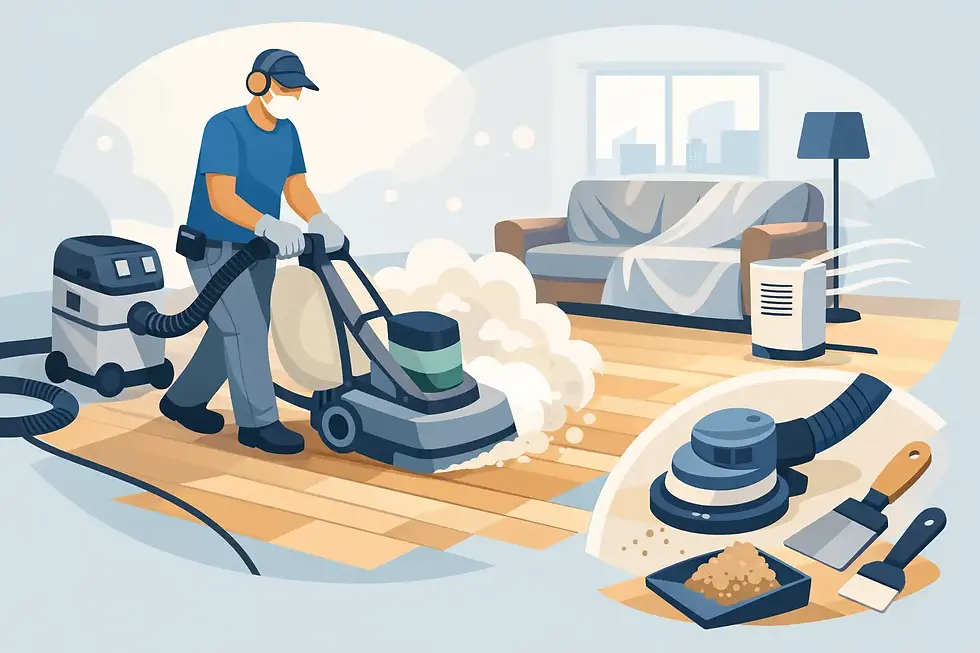
Once the condition is understood, the existing finish is removed. This is where professional machinery matters. Large floor sanders are useful on open tread surfaces, but stair work relies heavily on specialist edging and detail sanding equipment to reach corners, profiles and tight sections. Good dust extraction also makes a real difference in lived-in homes, particularly in hallways where disruption spreads quickly through the property.

Why stairs need a different approach from floors

A flat floor gives a sanding team room to move and a fairly consistent surface to work across. Stairs do not. Every tread edge is visible, every inconsistency catches the light and every finish has to cope with concentrated wear in a small area.

That changes the job in a few important ways. First, preparation takes longer. Staples, carpet rods, adhesive residue and paint on risers all need to be removed properly. Second, sanding has to be controlled to avoid overcutting nosings and edges. Third, the finishing system needs to suit both appearance and practical use. A finish that looks warm and natural may be ideal in one home, while a harder-wearing commercial-grade lacquer may be the better choice in another.

It also depends on the timber. Pine staircases, common in older London terraces, can be beautiful when restored, but they mark more easily than oak. Hardwood stairs generally tolerate heavy wear better, yet can show scratches more sharply if the sheen level is too high. That is why finish choice should never be an afterthought.

Common problems uncovered during staircase restoration

A staircase often hides more issues than the customer expects. Once carpets come up or old coatings are sanded back, the true condition becomes clearer. Some of the most common problems include black edge staining from old grippers, gaps at tread joints, cracked nosings, squeaks caused by movement, and uneven colour from historic patch repairs.

Not every defect can or should be erased completely. That is an important part of setting expectations. Deep historic wear in a period staircase may soften with sanding rather than disappear entirely, and some old nail holes or age marks are part of the timber's character. Good restoration is about improving appearance and performance without stripping away what makes the staircase look authentic.

Where repairs are needed, these should be carried out before final sanding and finishing. Loose treads can often be secured, damaged sections can sometimes be spliced or filled depending on severity, and gaps may be addressed where appropriate. The right repair depends on how visible the area is and how much structural stress it takes.

Choosing the right finish for restored stairs

The finish has a major effect on both appearance and maintenance. For households that want a natural timber look, hardwax oils are a popular option. They enhance grain beautifully and tend to wear in a more forgiving way, which can be useful on stairs that see daily traffic. Localised maintenance is often simpler too.

Lacquers are another strong option, especially where durability is the priority. High-quality products from brands such as Bona and Loba can provide excellent protection with different sheen levels to suit the property. Matt and extra matt finishes are often preferred in modern interiors or period homes where customers want a cleaner, less glossy result.

There is no single best answer. A family home with children, a rental property, and a carefully restored period house may all need something different. Slip resistance, ease of cleaning, expected wear and the overall style of the hallway all matter. On stairs in particular, finish balance is important. You want protection, but not an overly shiny surface that highlights every scuff.

How long staircase sanding and restoration takes

Timing depends on the size and condition of the staircase, the extent of repairs and the finish system being applied. A straightforward staircase may be completed in a shorter timeframe, while a heavily worn or intricately detailed one will take longer.

Drying and curing also affect the schedule. Even when a finish feels dry to the touch, it may still need time before taking heavy use. This matters in busy homes where the staircase is the main route between floors. Planning the work properly helps reduce inconvenience, and experienced teams will explain what level of access is possible at each stage.

For many London households, disruption is just as important as the result. That is why low-dust equipment and careful job planning are such a key part of the service. Hallways and stairwells are central spaces, not tucked-away rooms, so control and cleanliness matter from the first pass of sanding onwards.

Is staircase restoration better than replacement?

In many cases, yes. If the staircase is structurally sound, restoration is often more cost-effective and far less disruptive than full replacement. It preserves original features, avoids major building work and can transform the look of the entrance and landing with much less upheaval.

Replacement may be necessary where there is serious structural failure, severe rot or extensive previous alterations that cannot be corrected economically. But most worn timber staircases do not need replacing simply because they look dated. Sanding, repairs and refinishing can usually achieve a substantial improvement.

This is especially true in period properties, where original stair details add real value to the home. Restoring them keeps that character intact. In more modern homes, staircase sanding can remove tired orange-toned finishes or old carpet damage and create a cleaner, more contemporary look.

What homeowners should do before work begins

Preparation is usually simple, but it helps to know what to expect. The staircase should be cleared of runners, furniture, ornaments and anything fixed loosely around the area. Pictures or decorative items near the stairs may also need to be removed in advance.

Access planning matters too. If the staircase is the only route upstairs, the work may need to be phased carefully. A professional team will discuss this before starting so there are no surprises once sanding is underway.

Customers often worry most about dust, noise and how the home will function during the project. Those are fair concerns. Modern dust extraction significantly reduces airborne dust, but no sanding job is completely silent, and some short-term inconvenience is normal. The key is controlled disruption, good communication and a finish schedule that suits the household.

Why professional staircase sanding pays off

Stair work is technical, visible and unforgiving. Uneven sanding, poor edge work or the wrong finish will show quickly and wear badly. Professional staircase sanding and restoration gives you a better result not just because of machinery, but because of judgement - knowing how far to sand, what to repair, which finish to recommend and how to preserve the staircase's character.

For London homeowners, landlords and renovators, that matters even more in properties where original timber features are part of the appeal. A properly restored staircase can sharpen the first impression of the whole house, tie together newly sanded floors and make the space feel looked after again.

At Love Your Floor London, this type of work is approached with the same care as any full wood floor restoration project: specialist sanding equipment, premium finishing products and a practical understanding of how to carry out quality work in occupied homes. When the job is done well, the staircase does not just look cleaner - it feels solid, considered and ready for years of use.

If your stairs are hidden under old carpet, dulled by heavy wear or simply no longer doing the rest of your home justice, restoration is often the smarter next step than living with them for another year.


Comments


bottom of page